 |
|
|
An Online Newsletter Showcasing Our Programs for the Month of November 2026! |
|
|
To align with the Japan Foundation's global branding umbrella, the Japan Foundation, Los Angeles, has transitioned our website to the new official subdomain at la.jpf.go.jp. Our legacy address, jflalc.org, will remain active and automatically redirect all visitors to our new address so either way, you can keep up on our latest activities. In our gallery, the current exhibition Ai: Rain Drawings in Natural Indigo and Silver by artist Miya Ando continues this month. Expanding on the themes of this exhibition, we are presenting two complementary online lectures exploring the lore and modern legacy of Japanese indigo. The first talk examines the supernatural history of rainmaking rituals, taking attendees on a rare exploration of ancient imperial dragon invocations and rural drought traditions, such as submerging massive bronze temple bells in local waters. The second lecture tracks the evolution of Japanese denim, revealing how regional cotton and dyeing traditions in Okayama and Hiroshima (historic Bitchū and Bingo) fused with postwar American workwear culture to establish Japan's jeans industry as a global gold standard of artisan craftsmanship. Our literary and performing arts offerings also expand this month with the premiere of a new six-part, classroom-style lecture series examining the millennium-long evolution of Japanese manga. The inaugural session explores how modern picto-textual storytelling developed from eighth-century emakimono handscrolls, Edo-period woodblock prints, and Kitazawa Rakuten’s pioneering Jiji Manga, highlighting the dynamic relationship between visual narrative traditions, Western influences, and the publishing industry. In cinema, our Filmmaker Series proudly hosts acclaimed director Shō Miyake during the weekend of November 13th at several locations and times. There will be a special screening of his award-winning drama Small, Slow But Steady (2022, 99 mins), at JFLA, followed by an in-depth conversation to discuss Miyake’s creative process and poignant approach to contemporary social themes Concluding our monthly lineup, rock artist and Shinto folklore researcher Nanase Aikawa presents an engaging lecture on the evolution of matsuri and Bon Odori throughout Southern California, sharing unique insights from her dual perspective as a music industry performer and scholar on how immigrant Nikkei communities preserved and nurtured sacred festival traditions through gatherings like the Nisei Week Festival. Whether your passion lies in heritage textiles, illustrated literature, cinema, or festive traditions, we look forward to helping you discover Your Japan. |
|
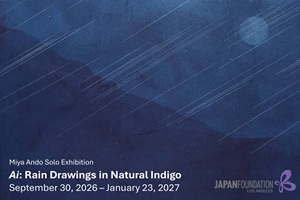 |
ART EXHIBITION Indigo (J: ai 藍) has been used in Japan for art and textiles since the sixth century CE. In Buddhist sutra manuscripts, sacred texts were written in shimmering gold and silver on deep indigo-dyed paper. Miya Ando draws upon this material history through her use of natural indigo and silver, bringing these traditional materials into a contemporary meditation on rain, language, and time. |
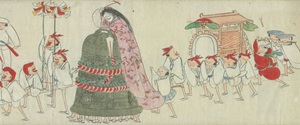 |
ONLINE LECTURE For centuries, humans have sought supernatural assistance for relief from droughts and floods. In Japan, tenth-century records show that dragons were enlisted in imperial rainmaking rituals. Buddhist texts and Asian folklore are ripe with tales of dragon kings who dwell in an undersea palace and have control over storms. These dragons also have a legendary love of treasure and desire for bells. While few rainmaking rituals are held today, in the past people took various actions to attract the attention of the dragon to encourage rain. In this talk we will take a rare tour of long-forgotten strategies rural communities developed that employed large temple bells beyond their sound-making, including soaking them in water or parading floats of bells and other water-related themes through the streets to make rain. |
|
|
IN-PERSON LECTURE SERIES Manga has quickly become one of the most popular forms of picto-textual literature. It is consumed across the world in nearly every available format and has generated fandoms that engage with the narratives through their characters, worlds, and premises. |
|
|
IN-PERSON LECTURE SERIES Japan has a long tradition of picto-textual storytelling. From eighth century emakimono handscrolls to ukiyoe woodblock prints, from akahon redbooks to KITAZAWA Rakuten’s Jiji Manga, Japanese people have been consuming literature with images alongside words for over a millennium. In this talk, Michael VanHartingsveldt discusses how modern manga is a confluence of Japanese and Western visual narrative traditions, then explores the manga publishing industry and the close relationship between manga creators and their audiences. |
|
|
FILMMAKER SERIES The Japan Foundation, Los Angeles, is pleased to announce that Japanese filmmaker SHŌ Miyake will be visiting Los Angeles later this year. His works are praised for their emotional treatment of sensitive topics and have been recognized by top awards including the prestigious Golden Leopard at the 2025 Locarno International Film Festival. |
|
|
DIRECTOR CONVERSATION AND FILM SCREENING Enjoy the film Small, Slow But Steady (2022, 99 mins) followed by an intimate conversation with its director SHŌ Miyake as he discusses his creative process, how he imbues semi-fictional characters with emotional motivations, and how his films address important - and often difficult - topics within Japanese society. The conversation will be moderated by JFLA Arts & Culture Program Officer Michael VanHartingsveldt and interpreted by Monika Uchiyama. |
|
|
IN-PERSON LECTURE Nanase Aikawa is a rock singer active on the front lines of the music industry who is also a researcher of Shinto culture and folklore. This lecture will focus on the “matsuri” and “Bon Odori” that took root in Southern California through Nikkei immigrants who crossed the ocean and blossomed in their own unique way through events such as the “Nisei Week Festival.” She will discuss traditional Japanese prayers, the spirit of community, and the evolution of these celebrations nurtured in a foreign land from the dual perspectives of a performer and a researcher. |
|
|
ONLINE LECTURE Discover the craft, culture, and innovation behind the global phenomenon of Japanese denim in this engaging talk on the history of Japan’s jeans industry. From the centuries-old indigo dyeing and cotton traditions of the Bitchū and Bingo regions (modern-day Okayama and Hiroshima) to the postwar obsession with American Levi’s as icons of freedom, uncover how domestic makers transformed an imported classic into a worldwide gold standard of craftsmanship. You will also learn how forward-thinking entrepreneurs navigated the globalization wave of the 1990s, pioneering both world-renowned artisanal denim brands and high-quality, accessible fashion for the global market. Whether you are a fashion enthusiast, a denim purist, or curious about the fusion of regional heritage and modern business strategy, join us for a deep dive into the unique forces driving Japan’s competitive denim culture. |
|
|
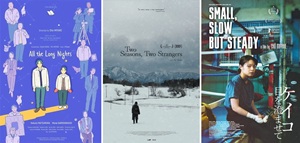
ON DEMAND New Titles Arriving November 4 Beginning November 4, our streaming lineup expands with five additions exploring literary adaptations and contemporary Japanese horror. Japanese Books — Stories, Writers & Cinema
Japanese Horror — Echoes of Fear
Watch now at en.jff.jpf.go.jp. Please note: Due to licensing restrictions, title availability varies by country and region. |
|
|
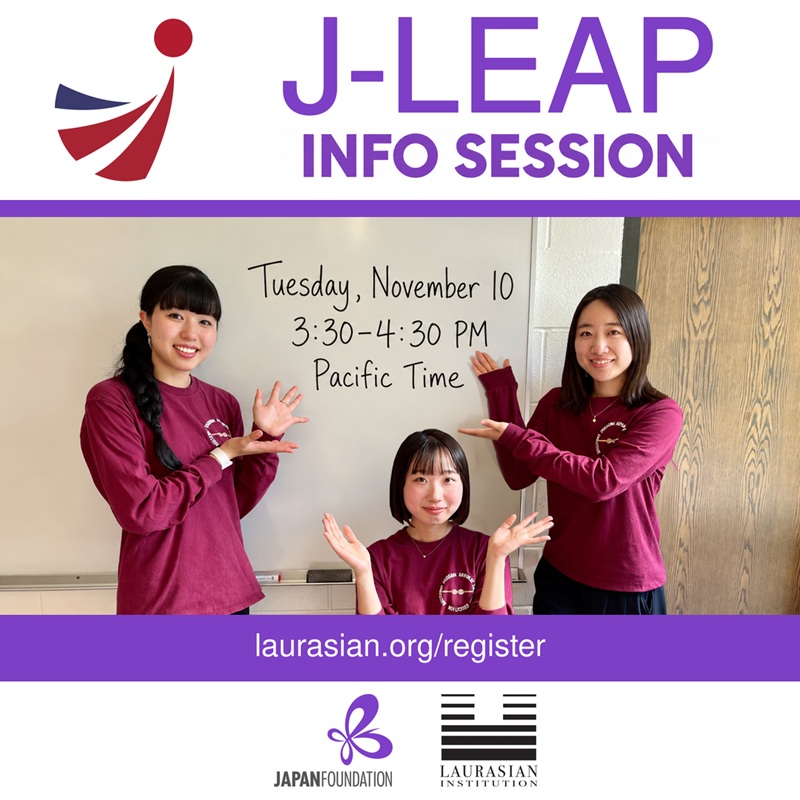
TEACHER PROGRAM This year's J-LEAP Lead Teacher (LT) application period for the cycle beginning in July/August 2027 has begun and Laurasian Institution is NOW ACCEPTING LEAD TEACHER/HOST SITE APPLICATIONS! Curious about what this great program has to offer? Please join us for a one-hour online Info Session on Tuesday, November 10th from 3:30-4:30pm (PT)/6:30-7:30 (ET). This info session will feature a panel of current J-LEAP lead teachers (LTs) and assistant teachers (ATs) to whom you will be able to ask all of your burning questions about this all-inclusive teacher dispatch program! Please tell your colleagues about this rare opportunity to hear straight from J-LEAP participants all across the U.S. about the ins and outs of this unique program! Register here: laurasian.org/register About J-LEAP: J-LEAP, or the Japanese-Language Education Assistant Program, is a Japanese teacher dispatch program co-administered by Laurasian Institution and Japan Foundation which is currently in its 15th year. Every year, a handful of new Assistant Teachers (ATs) are chosen and dispatched to K-12 schools throughout the US to enhance those Japanese programs by co-teaching fresh, authentic Japanese language and culture. You can read about the experiences of two current J-LEAP participants Honoko Tanioka at Kauai High School in Lihue, HI, and Kyoka Tsuchiya at Mears Middle School in Anchorage, AK! |
|
|
GRANTS The Japan Foundation invites individuals and organizations that are planning international exchange projects and activities to participate in our programs. Please read the Program Guidelines for Fiscal Year 2027 (April 1, 2027 to March 31, 2028) outline the full array of the Japan Foundation's applicable programs. |
|
Training Programs for Japanese-Language Teachers The Japan Foundation Japanese-Language Institute, Urawa organizes training programs on Basic Training, Japanese Language, and Japanese Teaching Methods Program for Japanese-language teachers outside of Japan. Japanese Language Program for Specialists This program provides specialists (Researchers, Postgraduate Students, Librarians, Museum Curators, etc.) who need a good command of Japanese language to conduct field work and research through an intensive residential training course on the Japanese language. Exhibitions Abroad Support Program This program is designed to provide financial support for museums and art institutions overseas that organize exhibitions introducing Japanese art and culture to audiences overseas. In addition, this program is designed to support overseas international exhibitions such as biennials/triennials introducing Japanese artists and their works. Support Program for Translation and Publication This program is designed to provide partial financial support for overseas publishers intending to translate and publish works originally written in Japanese. The program aims to foster better understanding of Japanese culture by encouraging overseas publishers to translate and publish Japanese works. The grant covers part of the translation and publishing costs (e.g., costs for paper, typesetting, platemaking, printing, and binding) Grant Program for Dispatching Artists and Cultural Specialists This program is designed to provide financial support for artists and Japanese cultural specialists who are invited by institutions outside Japan and participate in cultural events (e.g., performances, demonstrations, lectures and workshops) overseas with the aim of introducing Japanese arts and culture or of contributing to international society through arts and cultural projects. Ishibashi Foundation/The Japan Foundation Fellowship for Research on Japanese Art This program aims to support the development of professionals specializing in the study of Japanese visual arts by providing an opportunity for curators and researchers from abroad to conduct research in Japan, and by so doing, promote the study of the field and the introduction of Japanese art overseas. |
|
 |
|
|
Keisho Nihongo Support Programs Applications are now open for the 2026–27 Japanese Heritage Language (JHL) Support Program. Two types of support are available:
In previous years, the application period ran from September through January of the following year. Beginning in 2026, however, the application window will open in April. 2026–27 Application Period: April 1, 2026 – January 31, 2027 This revised timeline is intended to accommodate a broader range of JHL events and to provide schools with greater flexibility in integrating donated materials into their curricula. JHL schools and programs interested in applying for event support or book donations are encouraged to visit the following pages for more information: (Japanese): /jle-keishonihongo-programsj If you have any questions, please send inquiries to (jared_mcclellan@jpf.go.jp). |
|
 |
General Invitation to Join JF USA Digital Library We recently renewed and added many new books in coordination with our New York and Toronto offices for our patrons in the US and Canada. There have also been an uptick in the number of applicants as well, which shows that this is a very popular service. We have also updated the application survey and the confirmation emails are still going out once a week on Wednesdays by 6:30PM pacific time. If you register and do not receive a welcome email from us within a Wednesday of registering, please contact us so we can help you out. |
 |
|
|
2026-2027 Japanese Language Grants Now Available! Grant for Nationwide/Statewide/Region-wide Projects for Teachers Japanese-Language Education Project Grant Advocacy Support Letter If your Japanese language program is in danger of being cut due to COVID-19, we will send a support letter to stakeholders (Superintendent, Principal, Dean, etc.). Click Here to contact us and select Anything Related to Japanese Education. |
|
Japanese Language Education Update 154Applications for our popular J-LEAP assistant teacher program, conducted in partnership with The Laurasian Institution, officially opens this month. If you are interested in hosting an assistant teacher for the 2027 - 2029 academic school years, please submit your application materials by first deadline, December 1st, 2026.
This is the last month to apply for our Japanese-Language Teacher Training Program for Fiscal Year 2027. If you plan to apply, please review the complete application guidelines and submission deadlines linked above. Attending the ACTFL Convention and World Language Expo in San Antonio later this month? Stop by Booth 1922 to say hello, speak with our team, and pick up a special goody bag. As you may remember, the Japan Foundation, Los Angeles, sent two groups of Japanese-language teachers to our institute in Urawa, Saitama, Japan, for a special professional development program. Featured below is the latest installment of participant reflections, highlighting two teachers from each cohort as they discuss their experiences during this training program:
We invite you to take advantage of these upcoming grants, training opportunities, and resources to support your Japanese-language programs in the coming year. |
|

5700 Wilshire blvd, Suite 100
Los Angeles, CA 90036
jflainfo'at'jpf.go.jp
323.761.7510